How a watch is within? How does it works?


Mechanical Watch — Detailed Explanation of Its Parts
A mechanical watch is a precision instrument that measures and displays the passage of time using a complex system of mechanical components. Unlike a quartz watch, which relies on a battery and electronic oscillator, a mechanical watch operates through stored mechanical energy, gears, springs, and a regulating system.
The image shows a mechanical wristwatch in an exploded view, meaning that its components have been separated and arranged in approximately the order in which they are assembled. This makes it easier to understand the function and relationship of each part.
Crystal
The crystal is the transparent cover positioned above the dial. It protects the hands, dial, and other components from dust, moisture, scratches, and accidental contact.
Watch crystals can be made from different materials, including:
Sapphire crystal — extremely scratch-resistant and commonly used in high-quality watches.
Mineral glass — reasonably scratch-resistant and less expensive.
Acrylic crystal — a type of plastic that is relatively soft but can be polished and is resistant to shattering.
The crystal is normally secured to the watch case using a gasket, retaining ring, or pressure fit.
Bezel
The bezel is the ring surrounding the crystal. It helps hold the crystal securely in the case and forms part of the visible structure of the watch.
Depending on the watch, the bezel can be:
Fixed
Rotating
Decorative
Functional, such as on diving watches or chronographs
On a simple dress watch, the bezel may have primarily a structural and aesthetic function.
Dial
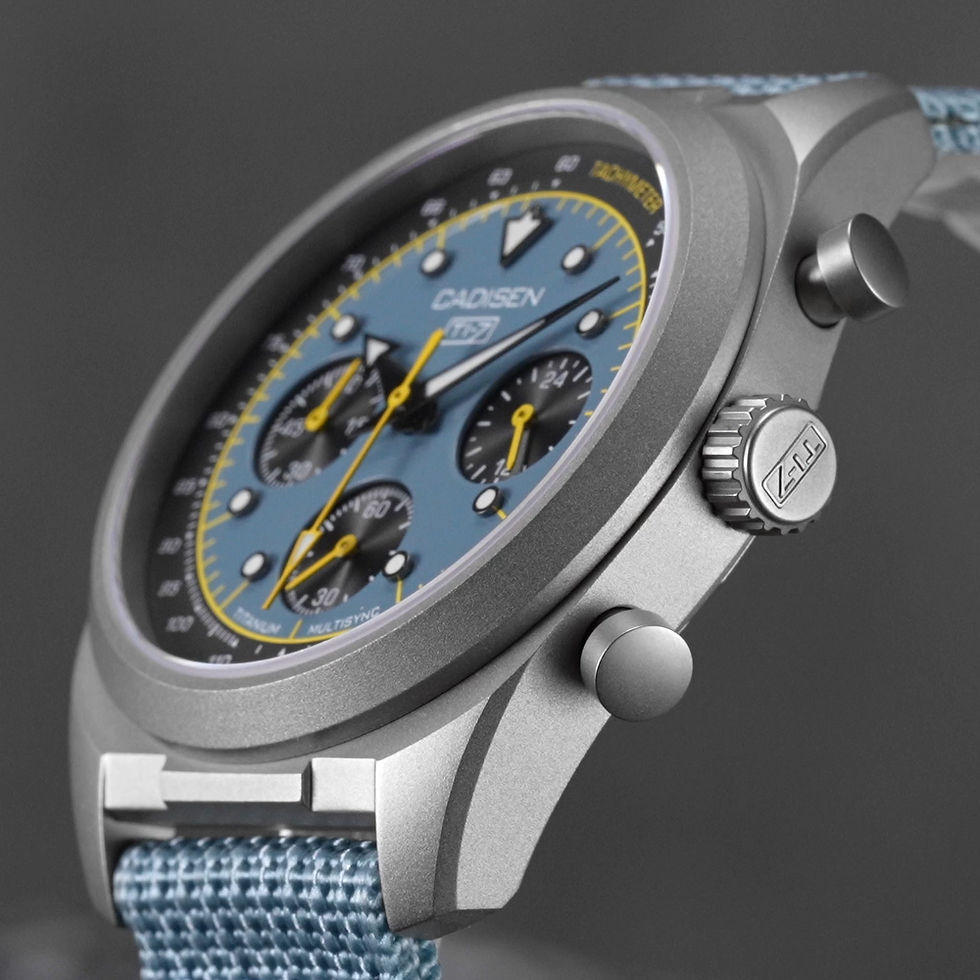
The dial, sometimes called the watch face, is the surface that displays the time.
It normally contains:
Hour markers
Minute markers
Hour hand
Minute hand
Seconds hand
Brand name
Date window, if present
Other indications or complications
In the illustrated watch, the dial includes traditional hour markers and a date window.
The dial itself does not generate or measure time. Instead, the movement underneath it drives the hands and other indications.
Movement
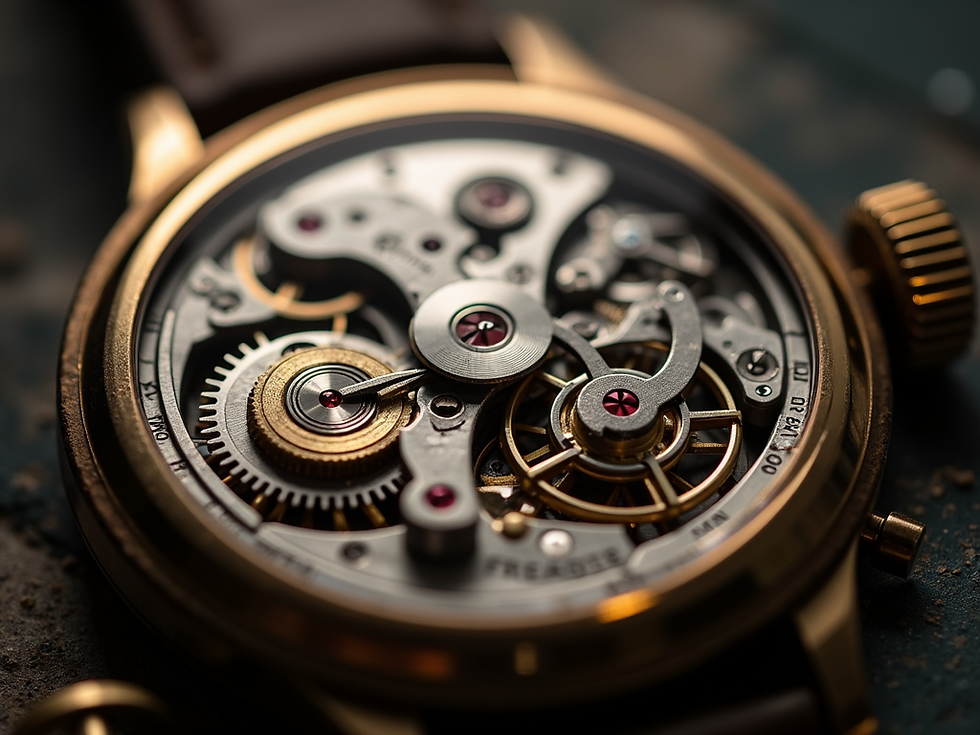
The movement is the mechanical mechanism inside the watch. It is essentially the engine or “heart” of the watch.
A mechanical movement contains many interconnected components, including:
Gears
Pinions
Springs
Jewels
Bridges
Plates
Escapement components
Balance wheel
Mainspring
Winding mechanism
The movement converts stored energy into controlled rotational motion. That motion is ultimately transmitted to the hands, allowing them to indicate the correct time.
There are two major types of mechanical watches:
Manual-winding:The wearer periodically winds the mainspring using the crown.
Automatic:A rotating rotor winds the mainspring as the wearer moves their wrist.
The illustrated watch is presented as an automatic mechanical watch.
Crown and Stem
The crown is the small knob located on the side of the watch case.
It is connected to the movement by the stem.
Depending on the watch design, the crown can be used to:
Wind the mainspring
Set the time
Set the date
Select certain functions
When the crown is rotated in the appropriate position, it transfers mechanical force through the stem into the winding mechanism.
In a traditional mechanical watch, the crown is therefore an important interface between the wearer and the movement.
Date Disc
The date disc is a circular component containing the numbers of the month, typically 1 through 31.
It is positioned underneath the dial and moves incrementally as the watch mechanism advances.
When the watch has a date complication, the date mechanism transfers motion from the movement to the date disc. Usually, the disc advances once every 24 hours.
The visible number appears through a small date aperture in the dial.
Not every mechanical watch has a date function, so this component may be absent in simpler designs.
Mainspring Barrel
The mainspring barrel stores the mechanical energy that powers the watch.
Inside the barrel is a tightly coiled mainspring.
When the watch is wound, energy is stored in this spring. As the spring gradually unwinds, it releases that energy and causes the barrel to rotate.
The barrel then transfers the energy through the gear train.
In simple terms:
Winding → energy stored in mainspring → barrel rotates → gears transmit energy → escapement controls energy → hands move
The mainspring is therefore one of the primary sources of energy in a mechanical watch.
Balance Wheel and Escapement
The balance wheel and escapement form one of the most important regulating systems in a mechanical watch.
The balance wheel oscillates back and forth at a precise frequency. Its oscillation provides the basic rhythm used to regulate the movement.
The escapement controls the release of energy from the gear train in small, precisely timed increments.
Together, they perform two critical functions:
They prevent the gear train from simply unwinding rapidly.
They divide the continuous release of energy into controlled intervals.
The result is a regulated movement that allows the hands to advance at a predictable rate.
The escapement typically includes components such as the:
Escape wheel
Pallet fork
Balance wheel
Balance spring
The accuracy of the watch depends heavily on the performance and adjustment of this system.
Movement Holder
The movement holder, sometimes called a movement ring or movement spacer, keeps the movement properly positioned inside the watch case.
It prevents the movement from moving excessively within the case and helps maintain correct alignment between the movement and components such as:
Crown
Stem
Dial
Hands
Case
The holder is particularly important because a mechanical movement contains delicate components that can be damaged by excessive movement or impact.
Case
The case is the main outer structure of the watch.
It protects the movement from:
Dust
Moisture
Impacts
Physical contact
Environmental contamination
The case also provides the mounting points for the:
Crystal
Bezel
Crown
Strap or bracelet
Case back
Cases can be manufactured from many materials, including:
Stainless steel
Titanium
Gold
Platinum
Ceramic
Other specialized materials
The shape and dimensions of the case determine much of the watch's external appearance.
Case Back
The case back closes the rear of the watch case.
Its primary function is to protect the movement and complete the enclosure of the watch.
There are several types of case backs.
A solid case back completely covers the movement.
A display case back, often made partly or entirely from sapphire crystal, allows the wearer to see the mechanical movement.
The case back can also contain information such as:
Brand
Model
Serial number
Water-resistance rating
Material
Manufacturing information
How All the Parts Work Together
The operation of a mechanical watch can be understood as a chain of mechanical energy.
1. Energy is generated or suppliedThe wearer winds the crown, or the automatic rotor winds the mainspring as the watch moves.
2. Energy is storedThe mainspring stores this energy inside the barrel.
3. Energy is transmittedAs the mainspring unwinds, it rotates the barrel and transfers energy through the gear train.
4. The escapement controls the energyThe escapement releases the energy in carefully controlled increments.
5. The balance regulates the movementThe balance wheel oscillates at a consistent frequency, establishing the rhythm of the watch.
6. The gear train drives the indicationsThe controlled mechanical motion is transmitted to the hands.
7. The hands display the timeThe hour, minute, and seconds hands move across the dial.
8. Additional mechanisms operate complicationsIf the watch has a date display, the appropriate mechanism advances the date disc once per day.

Comments